

Image Angel has announced that its forensic watermarking technology is now live and integrated on Friends2Follow/F2F.com, marking a significant development in protecting online creators. The integration speaks to a much wider issue within digital labour: the persistent failure of online platforms to adequately protect creators from non-consensual content sharing, impersonation, content theft and image-based abuse.
For sex workers and adult content creators, the unauthorised circulation of images is a form of harm that can affect income, safety, privacy, autonomy and control over one’s own body and image. When intimate, sexualised or commercially valuable images are copied, leaked, screenshotted, redistributed or used to create fake accounts, the consequences can be severe.
Creators may lose revenue and experience harassment. They may also face outing to family or employers, or become exposed to stalking, blackmail and reputational harm. In this context, integrating forensic watermarking into a creator platform is an important shift in how platforms understand their responsibility towards those whose labour and visibility sustain them.
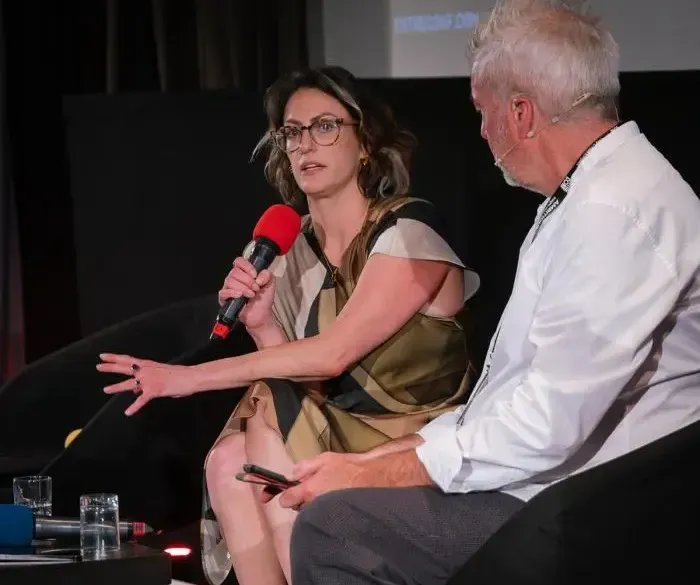
SimpleMedia by SimpleEscort spoke to Madeline Thomas, CEO and Founder of Image Angel. We asked Madline why this was such a significant moment for Image Angel and why this announcement matters now?
“Creators are under increasing pressure. AI, image theft and non-consensual sharing are becoming more sophisticated. Many creators are still expected to manage those risks on their own and at great expense, but an industry-wide shift toward deterrence is beginning. Friends2Follow is demonstrating that platforms have an important part to play in protecting the people who create value for them.
The collaboration shows that proactive protection, built on friction and traceability, can be built in at scale.”

Content theft as a Safety Issue
Friends2Follow describes itself as a premium social and creator platform designed to connect creators and fans through posts, media, subscriptions and other forms of digital engagement.
Its collaboration with Image Angel, therefore, matters because it embeds content protection into the infrastructure of a creator economy platform. Rather than leaving individual creators to manage risk entirely on their own, the platform-level use of forensic watermarking suggests a different model: one in which protection, traceability and deterrence are embedded into the systems through which content is distributed.
Sex workers and adult creators are often expected to manage digital risk alone. This can involve watermarking images, monitoring piracy sites and reporting impersonation accounts. It can also require them to limit what they show, manage multiple identities and remain constantly alert to the possibility that their content may be misused.
These strategies individualise responsibility for harms that are structurally produced. The problem is not simply that individual bad actors steal content. It is that platforms, payment infrastructures, search systems and social media environments have often allowed stolen content to circulate faster than creators can respond.
The dominant response to unauthorised sharing has historically been reactive. A creator discovers that content has been leaked, copied, or misused and attempts to have it removed. This approach places the creator in the position of investigator, complainant, and evidence gatherer after the harm has already occurred.
Takedown mechanisms can be slow, inconsistent and emotionally burdensome. They also struggle against the speed and replicability of digital content. Once an image has circulated, it may be downloaded, reposted, edited or archived. It may also be monetised or shared privately in ways that are extremely difficult to track.
This is particularly significant for sex workers because the harm of non-consensual sharing does not begin only when a platform refuses to remove content. The harm can occur at the moment of exposure. A leaked image may reveal someone’s sex work to people who did not previously know. It may then become a tool of threat, shame or extortion.
Once reposted across search engines, piracy sites or social media profiles, the creator may lose control over both the image and the context in which it is viewed. It may also weaken a creator’s ability to monetise their own labour, particularly where paying subscribers know that stolen versions may be available elsewhere. The issue is therefore not only one of intellectual property, although intellectual property remains relevant. It is also an issue of consent, labour, privacy and bodily autonomy.
“Once an image leaves your device, you often lose control over where it goes and who shares it. For creators, that can mean stolen content, leaked subscriber images, financial loss and significant emotional harm.
Image Angel helps restore accountability. Our technology invisibly applies forensic watermarking when content is received, identifying who the recipient was, not the creator. If content is leaked, it can be traced back to where it came from. That creates a powerful deterrent while giving platforms and creators a way to investigate misuse, rather than relying on guesswork after the damage has already been done.”
The limits of takedown culture
Forensic watermarking responds to this problem by altering the evidential landscape. Image Angel’s technology embeds invisible markers into images, enabling content to be traced even when shared without consent. In simple terms, this means that an image can carry hidden information that helps identify how, where, or by whom it has been redistributed. Unlike visible watermarks, which may be cropped, obscured or removed, forensic watermarking is designed to sit beneath the surface of the image. Its significance lies not in making misuse impossible, but in making misuse less invisible.
This point is worth emphasising because technological tools should not be overstated. Forensic watermarking cannot remove the social stigma attached to sex work. Nor can it guarantee platform compliance or prevent every form of screen capture. It should therefore be understood as one part of a broader system of legal, technological and regulatory protection, rather than as a complete solution.
It should not be presented as a substitute for listening to sex workers about their own needs. Its value lies instead in its capacity to shift the conditions under which abuse occurs. It introduces the possibility of deterrence, traceability and accountability into spaces where creators have often been left with little more than retrospective reporting mechanisms.
Moving protection upstream
The Friends2Follow integration is therefore significant because it moves protection upstream. Rather than treating content misuse as something to be addressed only after a creator has been harmed, forensic watermarking can be built into the platform architecture at the point of distribution.
This reframes content protection as a design issue rather than an individual responsibility. For sex workers and adult creators, digital safety cannot be reduced to personal vigilance. If platforms profit from creator content, they also have responsibilities regarding the risks that come with it.
This is part of a broader debate about platform governance and sex work. Digital platforms occupy an ambivalent position in sex workers’ lives. On one hand, they can provide visibility, income, community, screening tools and a degree of independence from more dangerous working conditions.
On the other hand, they can expose sex workers to surveillance and exclusion. This can occur through deplatforming, shadow banning, financial restriction, algorithmic discrimination and arbitrary enforcement of sexual content policies. Sex workers are frequently treated as risky users rather than rights-bearing users, even when the risks they face are produced or intensified by the platforms themselves.
In this context, platform-level protection represents an important conceptual shift. It suggests that the digital systems used by adult creators can be designed not only to extract value from their labour, but also to protect that labour from exploitation. This is particularly important given the wider pattern of regulatory and corporate responses to sex work online. Too often, measures framed as “safety” have resulted in exclusion rather than protection. Sex workers are removed from platforms, restricted by payment processors, hidden by algorithms or pushed into less visible digital spaces.
Forensic watermarking offers one possible response because it does not depend on erasing sex workers from digital spaces. Instead, it begins with the premise that creators will continue to produce, share, and monetise content, and that the appropriate response is to strengthen their control over it.
This is an important distinction. A great deal of sex work policy has historically attempted to protect people by restricting their visibility, limiting their access to services or criminalising the conditions around their work. By contrast, content protection technologies may offer a more pragmatic approach: one that accepts the reality of online adult labour and seeks to reduce harm within it.
We asked Madline why it is importing for this kind of protection to be built into platforms such as Friends2Follow and she told us:
”Creators shouldn't have to become cybersecurity experts to do their jobs. They already invest huge amounts of time producing content and building communities, yet they're often expected to deal with piracy, abuse and content theft with very limited support.
Protection is most effective when it's built into the platform itself. That means it works automatically, consistently and at scale. It also sends a clear message that safety isn't just the creator's responsibility, it's a shared responsibility between platforms, technology providers and the wider online ecosystem.”
Digital Bodily Autonomy
The language of “content theft” can sometimes obscure the embodied nature of the harm involved. For many creators, especially sex workers, content is not a neutral commodity. It may include sexual expression, intimate performance, identifiable features, private spaces or carefully managed forms of self-presentation. To lose control over that content is therefore to lose control over the context in which one’s image is seen, interpreted and circulated.
This is why the concept of digital bodily autonomy is useful. It captures the idea that autonomy over the body does not end when an image is created or uploaded. Consent to share content in one context does not consent to that content being copied, resold, leaked, or weaponised elsewhere.
This is also why the evidential function of forensic watermarking matters. Creators often have to prove ownership before a platform will act. They may also be expected to identify the source of a leak or provide evidence that an account is impersonating them. In practice, this places a heavy evidential burden on the person already affected by the abuse.
For sex workers, this burden is intensified by stigma, anonymity concerns and distrust of formal reporting mechanisms. A technology that strengthens evidential traceability may therefore help to shift power back towards the creator.
Towards Platform-Level Responsibility
This is where the Image Angel and Friends2Follow partnership can have wider significance beyond the immediate announcement. This partnership centres on creator consent and safety and could offer a model for other platforms. It also encourages a shift in industry expectations. Instead of asking why individual creators failed to protect themselves, platforms might be asked why they failed to build protection into their systems in the first place.
When asked what Madeline hopes creator platforms take from the Image Angel and F2F partnership Madeline stated
“I hope they see that protecting creators isn't just the right thing to do, it's good business. Trust and safety are becoming fundamental to platform growth and user retention.
My hope is that more platforms start asking not whether they should protect creators, but how quickly they can. If we can make proactive protection the norm instead of something people only think about after content has been leaked, we'll have taken a significant step towards creating a safer and more trusted digital environment for everyone.”
The partnership should therefore be understood as part of an emerging conversation about responsibility in the creator economy. Adult creators and sex workers have long been treated as simultaneously profitable and disposable. They are valuable enough to generate traffic, engagement and subscription income, but too often excluded from mainstream protections when abuse occurs.
Platform-level forensic watermarking does not resolve that contradiction, but it does challenge the assumption that content theft and non-consensual sharing are unavoidable occupational hazards to be managed privately by individual creators.
Conclusion
The Image Angel and Friends2Follow integration should therefore be understood as a promising development in the protection of sex workers and online creators. While forensic watermarking cannot, on its own, resolve image-based abuse, piracy or the wider structural vulnerabilities faced by sex workers online, it represents an important step towards a more protective digital environment. Its significance lies in recognising that content protection is not peripheral to creator safety. It is central to it.
For sex workers and online creators, this partnership points towards a more hopeful model of platform responsibility. Rather than placing the entire burden of safety on individuals after harm has already occurred, it shows how protection can be built into the infrastructure of creator platforms from the outset.
The integration of forensic watermarking into Friends2Follow suggests that digital safety can move beyond individual survival strategies and towards a more collective, preventative and platform-level approach.