

The relationship between social media and sex workers’ safety is now central to any serious discussion of digital rights, labour rights and online harm. For many sex workers, social media platforms are not merely promotional tools, but part of the wider infrastructure through which work is organised, community is sustained, clients are assessed, political speech is made possible, and independence is maintained.
Consequently, when sex workers are removed from these spaces, the harm cannot be understood simply as the loss of an account or the removal of an isolated post. It is a form of digital exclusion that affects income, safety, visibility, privacy and access to community.
Across mainstream platforms, sex workers continue to report account deletion, shadowbanning, rejected images, suppressed links, restricted hashtags and moderation decisions that are difficult to understand or appeal. Although these practices are often framed as content moderation, they operate in practice as a form of erasure from the same digital spaces that others are expected to use for work, networking, creativity, organising and public participation. This is particularly significant because sex workers are frequently required to be visible enough to earn and organise, while simultaneously being punished for that visibility.
The central issue is not whether platforms should act against exploitation, trafficking, abuse or non-consensual sexual content. These are serious harms and should be addressed. Rather, the problem is that platform policies often fail to distinguish clearly between abuse and consensual adult sex work. When sex workers themselves are treated as a risk category, online safety becomes a mechanism through which stigma is reproduced.
For this article, Simple Media, SimpleEscort's editorial project, spoke to Maedb Joy, founder and artistic director of Sexquisite Events.
Sexquisite is a sex worker-led performing arts company that platforms sex worker artists and uses performance, cabaret, theatre, podcasts and exhibitions to challenge stigma and create political and cultural change.
Maedb is a poet, actor, writer and theatre-maker whose work connects sex worker visibility, community, art and activism. Her writing on the Online Safety Act for Polyester is already cited in this article, and her comments here help ground the issue in the lived realities of sex workers navigating social media restrictions, censorship and digital exclusion.
Social media as sex worker infrastructure
The European Sex Workers’ Rights Alliance has argued that social media is an essential space for sex workers’ rights, safety, visibility and collective life. This matters because access to mainstream platforms is not optional or trivial. For many sex workers, these spaces are part of the practical conditions through which they access income, mutual aid, community knowledge and public voice. Consequently, restrictions on those platforms can have immediate effects on workers’ ability to remain financially stable, socially connected and occupationally safe.

As Maedb Joy explains, the impact of losing a platform is often misunderstood:
I think people think that losing an Instagram account is just losing an Instagram, when in reality, it’s lots of our livelihoods, and it’s our personal network as well, and years of hard work and networking.
This matters because social media accounts are not just social media pages; for many sex workers, they are professional infrastructures built over years of labour, connection and visibility.
Joy also emphasises that sex workers are rarely only doing one form of work, and that digital exclusion can block access to the other creative, professional and community-based work that they do alongside or beyond sex work. As she explains:
For many of us, Instagram is a space for our exit jobs away from sex work, side businesses, side hustles. Many of us have multifaceted identities. So, as well as working as sex workers, we’re also artists, event organisers, dancers, workshop facilitators.
Her point challenges the assumption that censoring sex workers only affects sex work. It can restrict access to artistic work, events, education, performance, activism and other forms of income. This exposes a contradiction at the heart of social attitudes towards sex work. Sex workers are often told to leave the industry, yet the digital tools that might allow them to build alternative income streams, creative careers or public platforms are also restricted. As Joy puts it, Society tells you don’t do sex work, and then they block all of our avenues to other options. So, it’s completely demobilising.
What erasure looks like
The erasure of sex workers from social media does not always take the form of an obvious or final ban. In some cases, an account disappears entirely, a profile is deleted, or a worker is locked out without a meaningful explanation or appeal route. In many other cases, however, the process is quieter and more difficult to challenge. A worker may remain technically present on a platform while their posts stop reaching followers, their engagement collapses, their links are suppressed, or their content becomes difficult to find.
Joy’s essay for Polyester, A Sex Worker on the Impact of the Online Safety Act, she writes that sex workers now risk erasure in a digital era that demands you exist online.
This is the central tension: sex workers are being pushed offline at the same time as digital presence has become increasingly necessary for work, survival and public participation.
This is also reflected in wider research. Hacking//Hustling’s work on shadow banning describes how sex workers can remain technically present online while becoming difficult to find, contact or support. Similarly, Davisson and Alati argue that social media community guidelines restricting nudity, sexual content and solicitation can limit sex workers’ ability to participate in public space, advocate for themselves and access community online.
The impact on sex workers
The consequences of social media erasure are material, emotional, political and safety-related. Financially, the loss of a platform can mean the loss of bookings, subscribers, collaborations, events and other forms of work that depend on visibility and audience-building. For workers already facing economic insecurity, the sudden disappearance or suspension of an account can create immediate pressure to replace lost income, often under less controlled, more stressful conditions.
Joy’s own experience illustrates how this can affect work beyond direct sex work advertising. Speaking to SimpleMedia, she described launching her poetry zine, Home Sweet Hell, after sitting with the work for four years and waiting until she had enough momentum behind her.
At the point of release, she had built an audience of almost 10,000 followers, only to then lose her account. Her experience demonstrates how platform deletion can disrupt creative work, erode momentum around independent projects, and force workers to rebuild professional visibility from the ground up. In this sense, account deletion not only affects immediate income; it can demobilise a wider career.
Home Sweet Hell launched on 10 June and brings together poetry, playtext and fragments of writing developed from Maedb’s wider creative practice. Its launch is also a reminder of the central argument of this article: when sex workers are erased from social media, they are not only blocked from advertising sex work. They are also blocked from sharing art, building audiences, sustaining creative projects and accessing the same cultural spaces as everyone else.
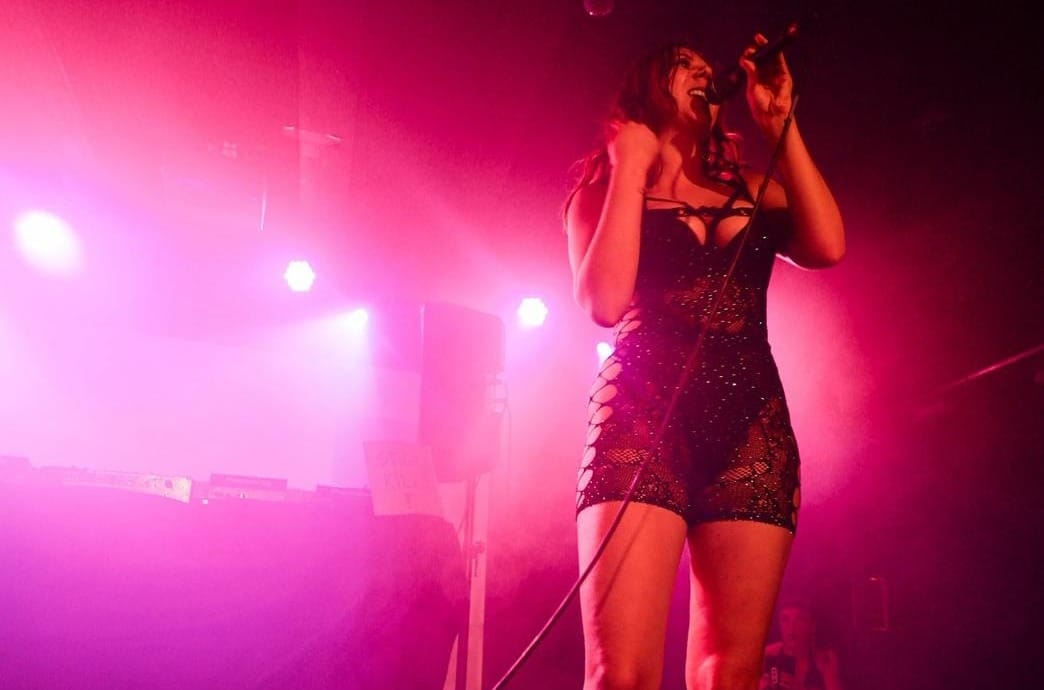
Support Maedb Joy here: www.maedbjoy.com
The safety implications are equally significant. Online platforms can allow sex workers to advertise independently, communicate boundaries in advance, assess potential clients, avoid exploitative third parties and share information with other workers. If those tools are weakened or removed, workers may be pushed towards less safe working conditions, including longer hours, reduced screening, increased reliance on regulars they may otherwise avoid, or greater dependence on third parties.
This concern is supported by sex-worker-led research on FOSTA-SESTA, which has shown that the removal of online spaces can worsen financial conditions, reduce access to community and undermine workers’ ability to screen clients. Research on occupational safety has also found that seeing mostly pre-screened regular clients is associated with lower odds of workplace sexual violence and police harassment among sex workers. Although not all of this research is specifically about social media, it supports a central point made by sex worker organisations. When workers lose access to online tools that help them communicate, screen and organise their work, their safety can be affected.
Joy described the severe consequences of platform loss for workers who depend on online visibility for income. Discussing a worker she knows who lost her Instagram account, she explained:
I think it’s no coincidence that her earnings completely dropped basically overnight, and she had to downsize her house; she had bailiffs come into her house. She is a mother, she provides for her children, and she was an OnlyFans creator with a massive Instagram following, and it’s completely ruined her life.
This account makes clear that social media erasure is not confined to the digital sphere. It can affect housing, parenting, financial security, physical health and the ability to maintain a stable life beyond work. It also shows why platform censorship should not be treated as a minor inconvenience. For workers whose income depends on visibility, an account deletion can have immediate and severe consequences.
There is also a political dimension to this erasure. Sex workers use social media to campaign, educate, organise and challenge stigma. When sex worker accounts and organisations are restricted, it becomes harder for workers to speak publicly about the policies, laws and platforms that shape their lives. Digital exclusion, therefore, operates not only as economic harm but also as a form of political silencing.
The problem with “safety” when sex workers are excluded
The language of online safety is frequently used to justify restrictions on sexual content and adult services. Platforms and regulators often present these restrictions as necessary responses to exploitation, trafficking, abuse or harmful sexual material. However, while those harms are real, consensual adult sex work is not the same as abuse, and policies that fail to recognise this distinction risk harming the very people they claim to protect.
The difficulty is that platform systems often collapse sex work, nudity, sexual expression, adult services and exploitation into overlapping categories of risk. Consequently, sex workers can be punished under rules that are publicly justified as protective. This is not a neutral process. It reflects long-standing stigma in which sex workers are treated as inherently suspicious, and in which their words, images, links, usernames and communities are interpreted through a presumption of harm.

A sex workers’ rights approach must begin from the premise that sex workers are workers and experts in their own safety. Policies designed without sex workers are likely to misunderstand the realities of sex work, misidentify the sources of risk and remove tools that workers use to protect themselves. Consequently, any meaningful approach to online safety must include sex workers not as objects of policy, but as participants in its design.
Joy argues that one of the most overlooked consequences of social media erasure is that it prevents sex workers from existing digitally beyond sex work itself.
I think what’s missing from the conversation is that it’s blocking our access to things that aren’t even related to sex work… events, activism, workshops, as dancers, writers, performers, why is that being blocked? she says.
This reveals the wider discriminatory logic of platform moderation. Even when sex workers attempt to comply with community guidelines, their presence can still be treated as suspicious. As Joy puts it: When people are adhering to community guidelines and being acutely aware of it, it’s like one rule for us and another for an influencer that’s been on Love Island.
Forced visibility and forced disappearance
One of the central contradictions of current platform governance is that sex workers are often placed between forced visibility and forced disappearance. On the one hand, Joy’s Polyester essay raises concerns about workers being pressured to use headshots on adult advertising platforms, despite the serious consequences of public identification.
For sex workers, being identifiable can create risks relating to stigma, other employment, housing, family relationships, harassment and personal safety. Although platforms may frame identification as a safety measure, workers may experience it as forced exposure.
On the other hand, sex workers are simultaneously made invisible on mainstream platforms, where accounts are deleted, reach is restricted, content is suppressed, and organising is treated as suspect. The result is a contradictory system in which workers may be required to expose themselves in some contexts while being erased from others. This tension is especially harmful because privacy and visibility are not abstract concerns for sex workers; they are practical conditions of safety, autonomy and survival.
The impact of this contradiction is unevenly distributed. Workers who already face marginalisation, including migrant workers, racialised workers, trans workers, disabled workers, queer workers, single parents, survivors and workers experiencing poverty, may be less able to absorb the effects of digital exclusion.
For many, sex work offers flexibility, autonomy and economic survival in circumstances where conventional employment may be inaccessible, unsafe or insufficient. Consequently, platform restrictions can intensify existing inequalities rather than reduce harm.
What needs to change
The answer is not a rule-free internet. Sex workers are not asking platforms to ignore abuse, exploitation or non-consensual harm. Rather, they are asking platforms to stop treating sex work, sex worker organising and sex worker visibility as though they are forms of abuse in themselves.
Platforms should adopt clear rules that distinguish between consensual adult sex work and exploitation. They should provide transparent explanations for takedowns, meaningful appeal routes, human review and explicit protection for advocacy, harm reduction and community content. Furthermore, platforms should publish information about how moderation affects sex workers and sex worker-led organisations, because without transparency, it is difficult to challenge discriminatory enforcement.
Most importantly, platforms and policymakers must work directly with sex workers and sex worker-led organisations. Rules about sex workers should not be made without sex workers. If platforms claim to care about safety, they must listen to those who understand the risks most clearly.
ESWA’s report calls for platform accountability that addresses algorithmic bias, discriminatory content moderation and exclusionary terms of service. It also argues for policies shaped with sex worker rights groups and for moderation systems that recognise the difference between sexual expression, political organising, creative work and actual harm. Without that distinction, online safety risks become another mechanism through which sex workers are controlled rather than protected.
For Joy, platform accountability must include transparent and accessible appeal systems. As she explains, I think we need transparency about the appeal system. She describes trying to challenge account removal through Meta Verified, only to be told that the account had been deleted for non-compliance with community guidelines and that she could request an appeal. I’ve done that, she says. It’s fucking impossible to talk to anyone.
This lack of meaningful human review is central to the problem. Joy describes her own personal account being removed on the basis that she was impersonating someone: My personal account, they said, I was impersonating someone. I’m literally myself.
The absurdity of this example demonstrates how opaque moderation systems can misidentify users, remove accounts and then leave workers without any practical route to challenge the decision.
Joy also raises concern about the increasing reliance on automated moderation systems, particularly when they reproduce existing inequalities. As she puts it, AI probably is designed to be discriminatory. It’s going to be racist. It’s going to be sexist. It’s going to be homophobic, which we’re seeing happen. Her concern reflects a broader sex workers’ rights argument: if moderation systems are built within societies already shaped by whorephobia, racism, misogyny, homophobia and transphobia, they are likely to reproduce those biases unless platforms are held accountable.
Her final point reframes what accountability should mean. Platforms are increasingly expected to comply with online safety obligations, but Joy argues that accountability should not focus solely on whether companies remove prohibited content. It should also apply when moderation systems wrongly remove people from digital spaces, on which they rely to work, organise and survive. They should be fined for ruining people’s livelihoods and their businesses, she says.
Conclusion
The erasure of sex workers from social media affects income, safety, mental health, community, privacy, autonomy and political voice. It pushes workers out of public digital space while leaving the structural conditions that create harm untouched. Sex workers’ safety cannot be built through censorship, forced exposure or exclusion. It depends on rights, autonomy, privacy, labour protections, community and access to the same digital spaces that others use to work and participate in public life.
Consequently, a safer internet cannot be built by pushing sex workers out of it. Sex workers belong online, in public, in the community and in the conversations that shape the platforms they rely on. Sex workers’ rights are digital rights, and any platform policy that ignores this will continue to fail the people it claims to protect.
References:
Blunt, D. and Wolf, A. (2020) “Erased: The Impact of FOSTA-SESTA and the Removal of Backpage on Sex Workers”, Anti-Trafficking Review, 14, pp. 117–121.
Blunt, D., Wolf, A., Coombes, E. et al. (2020) Posting Into the Void: Studying the Impact of Shadowbanning on Sex Workers and Activists. Hacking//Hustling.
Davisson, A. and Alati, K. (2024) “Difficult to Just Exist’: Social Media Platform Community Guidelines and the Free Speech Rights of Sex Workers”, Social Media + Society.
European Sex Workers’ Rights Alliance (ESWA) (2025) Sex Workers Belong On Social Media: Recommendations for Platform Accountability.
Hamilton, V., Barakat, H. and Redmiles, E.M. (2022) “Risk, Resilience and Reward: Impacts of Shifting to Digital Sex Work.”
Joy, M. (2025) “A Sex Worker on the Impact of the Online Safety Act”, Polyester, 17 July.
McBride, B. et al. (2022) “Seeing pre-screened, regular clients associated with lower odds of workplace sexual violence and police harassment among sex workers in Metro Vancouver, Canada”, SSM - Population Health.
NSWP (2025) “Sex workers demand accountability from Meta: Our community stands against digital discrimination”, 30 May.