
On 3 February 2026, the Scottish Parliament rejected Ash Regan MSP’s attempt to introduce a Nordic Model-style law on sex work.
The Prostitution (Offences and Support) (Scotland) Bill fell at Stage 1 after MSPs voted 54 in favour and 64 against the motion to agree to its general principles. Had it passed, the bill would have created a new offence of paying for sexual acts, while repealing the existing offence of soliciting or importuning by prostitutes.
To supporters, the bill represented an attempt to challenge male demand, sexual exploitation and violence against women. To opponents, including sex worker-led campaigners, it represented something very different: another law designed in the name of protection, but without the meaningful involvement of the people most affected by it, who know that this form of criminalisation is harmful.
For Laura Baillie, policy and research officer in Scotland for Decrim, the bill’s defeat was not just a parliamentary event. It was the result of months of organising by sex workers and allies against a proposal they argued would make sex workers less safe.
In our conversation, Baillie described the scale of organising briefings, open letters, public campaigning, engagement with MSPs, and sending around 3,000 template messages to parliamentarians by supporters of the campaign. That organising matters because one of Scotland for Decrim’s central criticisms was not only what the bill proposed, but how it had been developed.
According to Baillie, sex workers were not involved in the drafting of the bill at all and were excluded from participating in the discussion. Scotland for Decrim’s public materials make a similar point: the campaign argues that sex workers must be listened to when laws are made about their lives, safety and working conditions.
The bill has now fallen. But the political debate behind it has not gone away. The question now is whether Scotland’s next steps on sex work policy will repeat the same exclusion or finally centre the voices of people currently selling sex.
What the bill proposed
The Nordic Model, sometimes called the “sex buyer law”, criminalises the purchase of sex while presenting those who sell sex as decriminalised. In theory, this shifts criminal responsibility away from people in full-service sex work and onto buyers, who are framed as driving demand for exploitation. The Scottish Parliament’s bill page states that it would have created “a new offence of paying for sexual acts” and repealed the existing offence of soliciting or importuning.
Scotland for Decrim argues that the current legal model in Scotland already makes sex work more dangerous. Selling sex itself is not illegal, but associated activities are criminalised. This means sex workers can still face legal and practical barriers around how they work, particularly when it comes to working together indoors for safety.
In that context, criminalising clients does not simply affect clients. It changes the conditions in which sex workers operate. If buyers are more fearful of detection, sex workers may have less time to screen them, negotiate boundaries, agree on terms or take basic safety precautions. The law may not directly criminalise the seller, but it can still make their working environment more hidden, rushed and precarious.
That is the core disagreement at the heart of the Nordic Model debate, as those who support the Nordic Model argue that criminalising the purchase of sex lowers exploitation. Whilst sex work research and activism that focuses on centring the voices of those with lived experience continually demonstrates that danger is increased under this model.
Why sex workers opposed the Nordic Model
Scotland for Decrim’s opposition to the bill was rooted in a practical claim: criminalisation makes sex workers less safe. This is a different way of thinking about safety from the one usually presented by supporters of the Nordic Model.
Supporters often argue that criminalising buyers reduces demand and therefore reduces exploitation. Sex worker-led groups instead focus on the immediate working conditions created by criminalisation: whether people can screen clients, work together, report violence, access healthcare, avoid homelessness, and seek help without fear of being punished or disbelieved.
If a sex worker has to work alone indoors because two people working from the same premises could risk being treated as brothel-keeping, that is a safety issue. If a street-based worker has to move to a more isolated area to avoid police attention, that is a safety issue. If a client is anxious about arrest and pushes for a rushed negotiation, that is a safety issue. If a worker cannot report violence because they fear criminalisation, stigma, eviction, immigration consequences or police surveillance, that is a safety issue.
That point cuts through the abstract language of “demand reduction”. The question is not only what the law intends to do. The question is what it does to the everyday risk-management strategies sex workers already use. This is also why sex worker-led groups reject the idea that the Nordic Model can be described simply as “decriminalising sex workers”.
It may remove or avoid some direct offences against those selling sex, but it still criminalises the conditions around them. If a client is criminalised, the worker is affected. If policing increases, the worker is affected. If transactions move into more hidden spaces, the worker is affected. If safety strategies become harder to use, workers are affected. A law can claim not to punish sex workers and still make their lives more dangerous.
A sex worker-led campaign, not just opposition
One of the most important parts of this story is what Scotland for Decrim has actually done. It is a sex worker-led campaign that has been building political, practical, media and public health opposition to criminalisation. Scotland for Decrim describes itself as a grassroots campaign fighting for the full decriminalisation of sex work in Scotland.
It is led by current sex workers, alongside former sex workers, feminists, academics, trade unionists, students and organisations working across human rights, drug decriminalisation, LGBTQIA+ liberation, housing justice and other movements. Its demands are broader than opposition to one bill: full decriminalisation, better protection from poverty and the conditions that drive people into sex work, better access to healthcare, housing and essential services, and an end to stigma, discrimination and violence against sex workers.
During the campaign against Regan’s bill, Scotland for Decrim produced public briefings, encouraged supporters to contact MSPs, supported local lobbying, directed people to MSP surgeries, shared online resources, encouraged offline conversations through flyering and community discussion, and asked supporters to join rapid-response action channels.
In our conversation, Baillie told me supporters sent around 3,000 template messages to MSPs. That figure matters because it shows the scale of organised public opposition around a bill that sex worker-led campaigners say had been drafted without meaningful input from current sex workers.
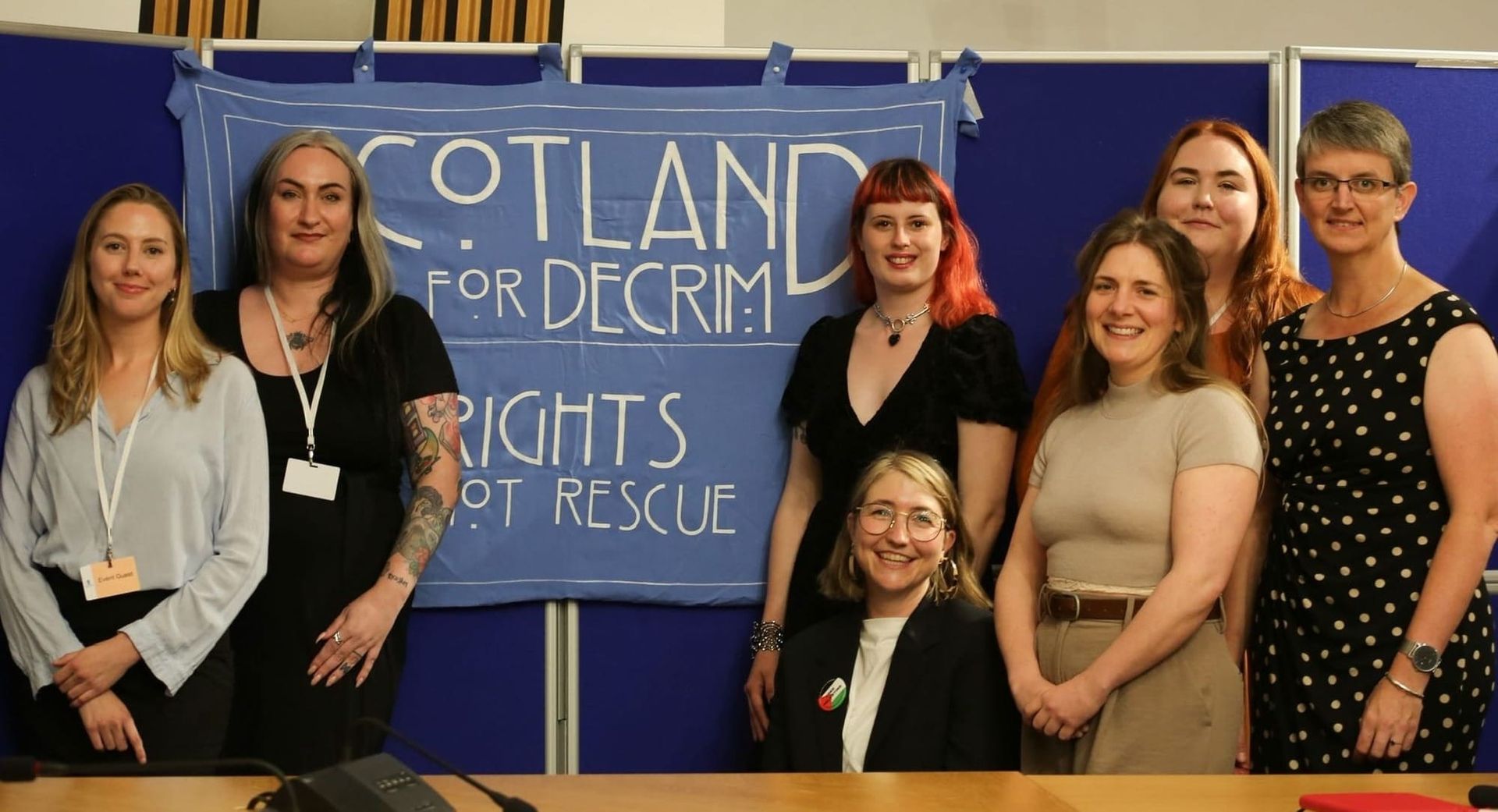
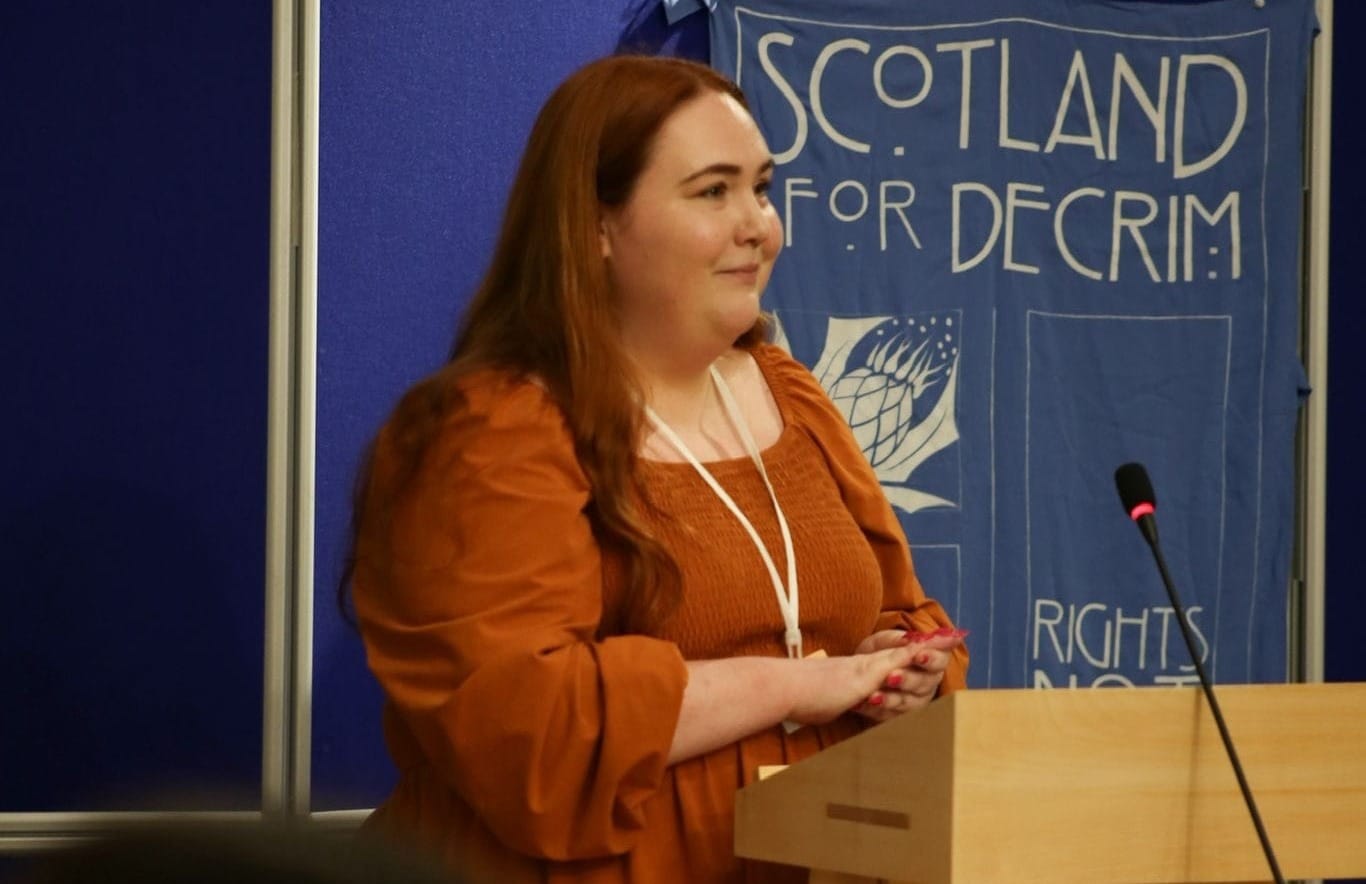
The group also worked through formal parliamentary routes. Scotland for Decrim responded to the Criminal Justice Committee’s call for views on the Prostitution (Offences and Support) (Scotland) Bill. It also held a Holyrood event on 10 September 2025, sponsored by Maggie Chapman MSP, bringing together members of the collective, allies, politicians and others to hear why sex workers were calling for full decriminalisation in Scotland.
The Holyrood panel included Laura Baillie, a member of Street Workers Collective Ireland speaking about the harms of the Nordic Model in Ireland, Lynsey from National Ugly Mugs, Ruth from PCS Scotland and Scotland for Decrim, a Scottish sex worker speaking about criminalisation under current laws, and Megan from Decrim Now.
Scotland for Decrim also used media interventions to shift the public debate
Members took part in a BBC Alba Eòrpa documentary on selling sex, arguing that if the government wants fewer people selling sex, it should take immediate action to reduce poverty, and that the Nordic Model would increase the risk of violence at work.
The group also highlighted press coverage from the Daily Record, where member Porcelain Victoria warned that sex workers would lose “basic survival techniques” if the bill passed, including the ability to screen clients by asking for ID, bank transfer details or vehicle information. This is a crucial part of the debate because it shows the gap between how criminalisation is discussed in parliament and how safety is practised by sex workers themselves.
The campaign included a direct protest. Scotland for Decrim held a protest outside the Scottish Parliament on 18 November 2025 to highlight concerns about Regan’s bill. It was also organised through open letters. In October 2025, the group published an open letter to MSPs opposing the Nordic Model. In January 2026, 126 sex workers in Scotland wrote to MSPs warning that the bill would worsen working conditions and increase violence. Those letters challenge the idea that sex workers were absent from the debate.
They were not absent from attempts to be included in the debate, but they were blocked from outright involvement. They were writing directly to elected representatives, explaining how the bill would affect their ability to work safely, screen clients, avoid violence and maintain control over their conditions.
Shortly before the Stage 1 vote, Scottish sex workers also wrote directly to First Minister John Swinney, urging him not to support Regan’s proposed legislation. The letter framed safety as the most urgent concern, arguing that criminalising the purchase of sex would make it harder for workers to obtain identifying information from clients and would leave intact one of the dangers of the current law: the fact that sex workers cannot legally work together indoors for safety.

Scotland for Decrim’s work also moved the debate into public health.
In January 2026, the group, alongside the National AIDS Trust, Nikolaos Papadogiannis of the University of Stirling, Andy Ramsay of St Andrews University Medical School and the Industrial Workers of the World, Giulia Sbaffi of the University of Stirling, and Waverley Care, raised concerns in an HIV briefing paper sent to MSPs.
The briefing warned that Regan’s Nordic Model bill could undermine Scotland’s goal to end HIV transmission by 2030, arguing that criminalising any facet of consensual sex work would increase HIV-related risk by pushing sex work further underground and reducing sex workers’ ability to manage risk, access services and seek support.
This breadth of activity matters. Scotland for Decrim did not simply reject the bill from the margins. It mobilised current sex workers, coordinated parliamentary engagement, produced public health briefings, organised protest, spoke to journalists, participated in documentary work, held events inside Holyrood, supported sex workers to engage with MSPs and the press, and placed sex worker testimony directly in front of parliamentarians.
That work cuts against one of the most persistent assumptions in sex work policy: that sex workers are spoken about because they are absent from political debate. In Scotland, they were not absent. They were writing, organising, briefing, protesting and warning MSPs that the bill would make them less safe.
The politics of being spoken for
Supporters of the Nordic Model often draw on the testimony of survivors who describe prostitution as violence, coercion and exploitation. Those experiences matter and should not be dismissed. But this cannot be used to erase the voices of sex workers who say that criminalisation puts them in greater danger.
The debate should not become a contest between “survivors” and “sex workers”, as though those categories are mutually exclusive. Many people currently selling sex are also survivors of violence, poverty, coercion or state failure. The problem comes when only some experiences are used to justify policy, while others are dismissed because they complicate the preferred political answer.
This is why Scotland for Decrim’s sex worker-led structure matters. It is making a democratic claim: people currently living under the consequences of sex work laws should be at the centre of designing those laws.
Baillie’s criticism that no sex workers were involved in drafting the bill goes to the heart of this. If a law is justified as protection, but the people it claims to protect say they were excluded from its development, then the issue is not only policy design; it is power.
The language of protection can be politically persuasive. It can also be politically dangerous. It can allow lawmakers to speak with moral certainty while disregarding the people who will have to live with the consequences. This is the tension at the centre of the Scottish debate. Sex workers were not asking politicians to deny violence; they were asking them to listen to the people most likely to be affected by the proposed solution.
The evidence and implementation problem
The bill also faced scrutiny over whether it could work in practice. The Criminal Justice Committee’s Stage 1 report examined the implications of creating a new offence, including policing, prosecution, penalties and costs. The Scottish Government did not ultimately support Regan’s bill as drafted.
In a ministerial statement, the Government said the bill raised “significant policy and operational challenges” and would need substantial amendment. It also said the bill did not adequately address concerns about activity being pushed underground and risks to women’s safety.
That is important because the Government’s position was not a straightforward rejection of the bill’s political principle. The statement made clear that the Government supported work to tackle commercial sexual exploitation and violence against women, but had serious concerns about this particular bill’s design, implementation and consultation.
For sex worker-led campaigners, that distinction is crucial. The fall of Regan’s bill does not mean the Nordic Model has disappeared from Scottish politics. It means one version of it failed to progress. The policy logic may return in another form, potentially through a government-led process with greater institutional weight.
What happens now?
The bill’s defeat does not mean the Scottish Government has abandoned the issue. The ministerial statement said the Government would continue work to tackle violence against women, support women to exit prostitution if they wish to do so, and support Police Scotland’s Operation Begonia approach. This helps explain the point Baillie made in the interview: the defeat of Reagan’s Members’ Bill may not be the end of the issue. The policy could return through a government-led process, potentially with more time, wider consultation and stronger institutional support.
This concern has now been sharpened by the Scottish Government’s creation of an Independent Commission on the Criminalisation of the Purchase of Sex, chaired by former Deputy Chief Constable of Police Scotland Fiona Taylor. Although the language of the Commission includes safety, support and consultation, its starting point is already fixed: how to “safely and effectively criminalise the purchase of sex in Scotland”.
For sex worker-led groups, that framing is deeply problematic. It treats criminalisation as the destination, rather than a question to be debated, despite sex workers repeatedly warning that criminalising clients makes their work more dangerous by reducing screening, increasing isolation, damaging trust in services and pushing the industry further underground.
For Scotland for Decrim, the next stage is critical. The question is now whether future policy will genuinely include sex workers, or whether consultation will reproduce the same hierarchy of expertise: listening to sex workers only when their experiences support criminalisation and sidelining them when they demand decriminalisation.
This is why the movement’s campaign work matters beyond the immediate vote.
Scotland for Decrim has already built a record of engagement: parliamentary submissions, Holyrood events, open letters, protests, media work, public health briefings, and direct contact with MSPs. If the Scottish Government now moves the issue into a new policy process, sex worker-led groups will be able to point to that record and ask why their expertise should be treated as peripheral.
The answer should be simple: it should not be.
Beyond criminalisation
Scotland's for Decrim’s answer is full decriminalisation. That means removing criminal laws from all aspects of the industry and ensuring access to justice and control over the conditions in which they work. It also means addressing the wider material conditions that shape people’s choices: poverty, housing, healthcare, discrimination and economic insecurity.
A serious safety agenda would ask what sex workers need to protect their human rights, report violence, access healthcare, avoid exploitation and work without stigma or fear. It would treat current sex workers not as a problem to be solved, but as people with expertise in the conditions of their own lives.
The Scottish Parliament has rejected Ash Regan’s bill, but the deeper debate is still open. Scotland now has a choice; it can continue to design sex work policy around sex workers, through frameworks that speak of protection while increasing criminalisation, or it can begin from a simpler democratic principle: nothing about sex workers without sex workers.
References:
Scottish Parliament. Prostitution (Offences and Support) (Scotland) Bill.
Scottish Parliament. Vote: S6M-20627 — Prostitution (Offences and Support) (Scotland) Bill.
Scottish Parliament. Prostitution (Offences and Support) (Scotland) Bill: Policy Memorandum.
Scottish Parliament Criminal Justice Committee. Stage 1 Report on the Prostitution (Offences and Support) (Scotland) Bill.
Scottish Government. Prostitution (Offences and Support) (Scotland) Bill: Ministerial Statement.
Scottish Government. Independent Commission on the Criminalisation of the Purchase of Sex.
Scotland for Decrim. Scotland for Decrim.
Scotland for Decrim. About Us.
Scotland for Decrim. Ash Regan’s Prostitution Bill.
Scotland for Decrim. The Current Situation in Scotland.
Scotland for Decrim. Updates.
Scotland for Decrim. Letter to the First Minister Against Regan’s Dangerous Bill.
Scotland for Decrim. HIV Concerns Raised Over Ash Regan’s Dangerous Bill.
Scotland for Decrim. Dominatrix Warns Sex Workers Will Lose “Basic Survival Techniques” if Prostitution Bill Passes.
Scotland for Decrim. Scottish Sex Workers Write Open Letter.
Scotland for Decrim. Protest Held Against Regan’s Dangerous Bill.
Scotland for Decrim. BBC Alba Eòrpa Documentary.
Scotland for Decrim. Scotland for Decrim’s Submission to the Criminal Justice Committee.
Scotland for Decrim. Open Letter to MSPs to Oppose the Nordic Model.
Scotland for Decrim. Holyrood Event.
Scotland for Decrim. Scotland for Decrim’s Holyrood Event in The Herald.